voice AI dev kit
What a voice AI dev kit really is, and what you still have to build yourself
A voice AI dev kit is finished hardware you build against, not a finished assistant. What the device owes you, what you owe it, and what the whole thing costs.
August 29, 2026 10 min read
The phrase dev kit does a great deal of quiet work in a product name, and it deserves pulling apart before money changes hands. A voice AI dev kit is not a prototype, not a bag of components, and not a consumer gadget with the branding peeled off. The device is finished on one side and deliberately unfinished on the other, and locating that line is most of the purchase decision.
A voice AI dev kit is manufactured, tested hardware sold to be built against: it captures speech, frames it into turns and delivers it to a backend the buyer runs, while every model, prompt and voice in the chain stays the buyer's responsibility.
The short version
- QuickComm sells three dev kits: the Earpiece at $350, the Table Top at $200 and the Bridge Node at $250, all pre-flashed with QuickComm firmware and configured from the console in three steps.
- The hardware owns clean framed capture, delivery to your endpoint, and staying powered and updatable: a 24-bit codec producing 16 kHz mono PCM, push to talk framing, pre-roll buffering and voice activity detection.
- The buyer owns the backend, the models, the behaviour and the uptime, whether that means OpenAI Realtime, Deepgram, Whisper, ElevenLabs or a local Ollama install.
- Units are built to order and ship in 10 days worldwide, shipping is free over $2,000, and volume discounts run from 5% at five units to 20% at fifty.
- The warranty is 12 months and excludes physical damage, returns run for 7 days, support lasts the lifetime of the device, and there is a builders community on Slack.
- Anybody who wants a finished assistant out of the box should not buy one, because nothing here produces an answer without code the buyer wrote.
What is a voice AI dev kit?
A development kit is hardware built to be built against. The unit arrives manufactured, tested, pre-flashed and ready to configure, on the assumption that the interesting part belongs to the buyer rather than the vendor.
The device solves the part that is tedious to solve well and dull to solve twice: getting clean audio off a microphone, framing it into chunks, and delivering those chunks reliably to a machine that will act on them. QuickComm publishes this article and sells exactly that layer, a narrower claim than most hardware pages make.
The word finished matters here. Nothing is provisional about the enclosure, the buttons or the radio, and nobody expects the buyer to redesign anything before it leaves the workshop.
What a voice AI dev kit is not
A dev kit is not a consumer product and not a finished application, two separate disappointments worth keeping apart. There is no app store, no assistant persona out of the box, and no guided experience for somebody who has never heard the word endpoint.
Hand one to a family member with no configuration behind it and nothing happens, because everything interesting is the part you were going to write. QuickComm does not transcribe, translate, summarise, extract tasks or provide language support.
Those capabilities belong to your stack. The hardware captures audio and delivers it, and what the audio becomes depends on the speech to text, the models, the wake word logic and the text to speech you choose.
Who owns what
Most disappointment with development hardware comes from a fuzzy sense of who owns which failure, so the split is worth writing down. You buy the half of the problem you did not want to do and keep the half you did.
What the hardware is responsible for
Clean, framed capture comes first: a 24-bit codec producing 16 kHz mono PCM, the format speech systems actually want, with on-device voice activity detection and push to talk framing so silence is never streamed. Pre-roll buffering holds a rolling window so the first syllable survives when somebody speaks a fraction before pressing.
Transport comes second: Wi-Fi 802.11 b/g/n on 2.4 GHz, or BLE audio streaming over Bluetooth 5.2 for local use, carried by the loss-tolerant udp-v1 protocol, which exists because networks drop packets and voice cannot wait for a retransmission.
Staying powered and current comes third: batteries and USB-C where needed, QR provisioning to get a device onto a network, OTA firmware updates so a unit in another room takes a new build, remote commands, and health telemetry so a quiet device can be told from a dead one.
What you are responsible for
The backend that receives the stream, the models and services behind it, the behaviour of the agent, and the uptime. Uptime is the one people underestimate, because a device working perfectly looks exactly like a broken one when the thing at the other end is down.
That responsibility is also where the freedom sits. Once configured, a device streams directly to your endpoint without depending on the console, and that endpoint can be a LAN server in your own building. Nothing obliges you to send audio somewhere you would rather it did not go, and no per-channel fees or platform lock-in sit between you and your own traffic.
Which of the three kits fits which problem?
The differences are physical rather than functional. All three share the same radios, codec, framing and management, so choosing between them is a question of where the microphone has to be.
| Device | Price | Shape | Suits |
|---|---|---|---|
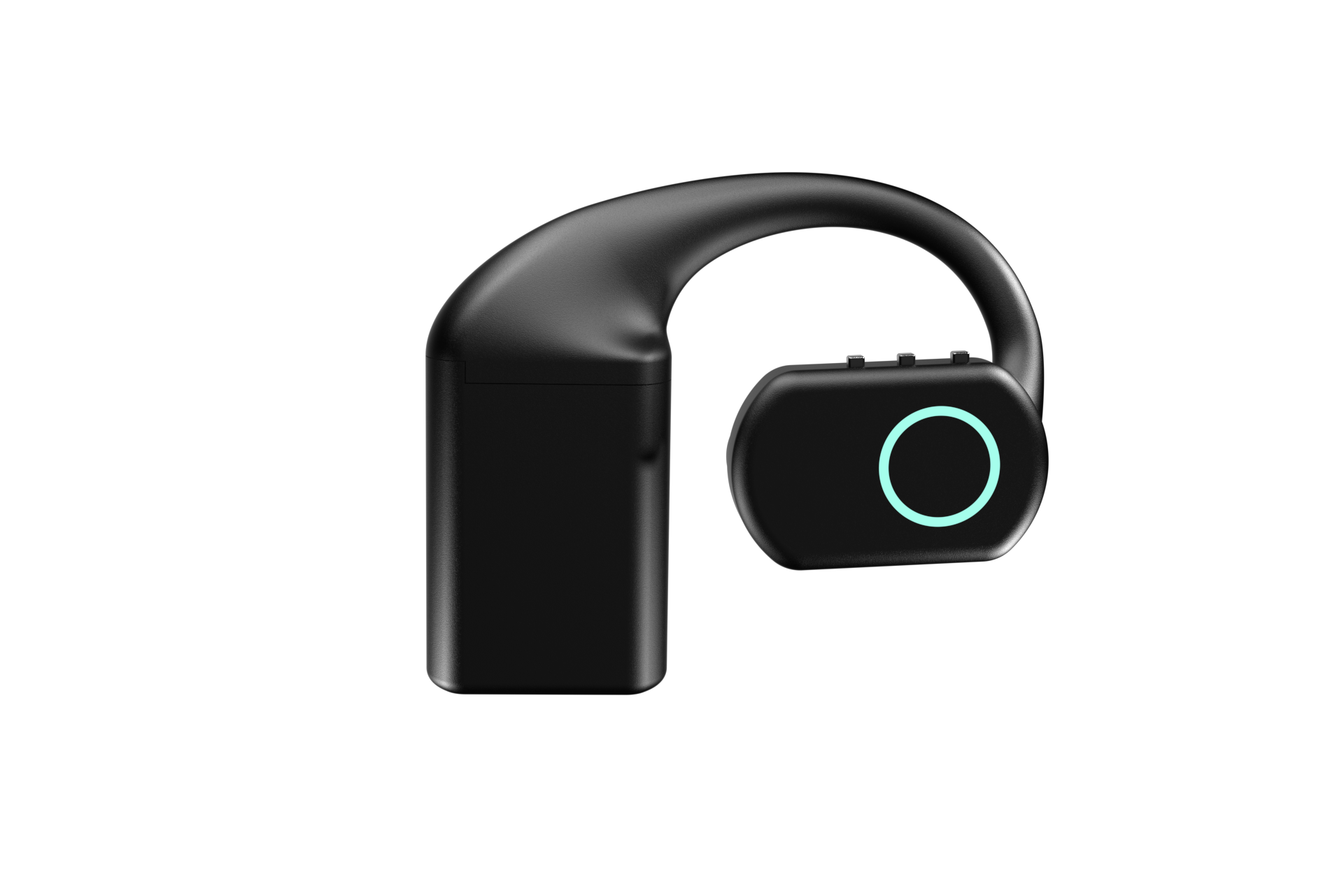
| QuickComm Earpiece | $350 | Over-ear wearable, three buttons, MEMS mic, speaker, RGB LED, three hot-swap 700 mAh packs at about 24 hours combined, plus a charging dock | One person with their hands busy, moving all day |
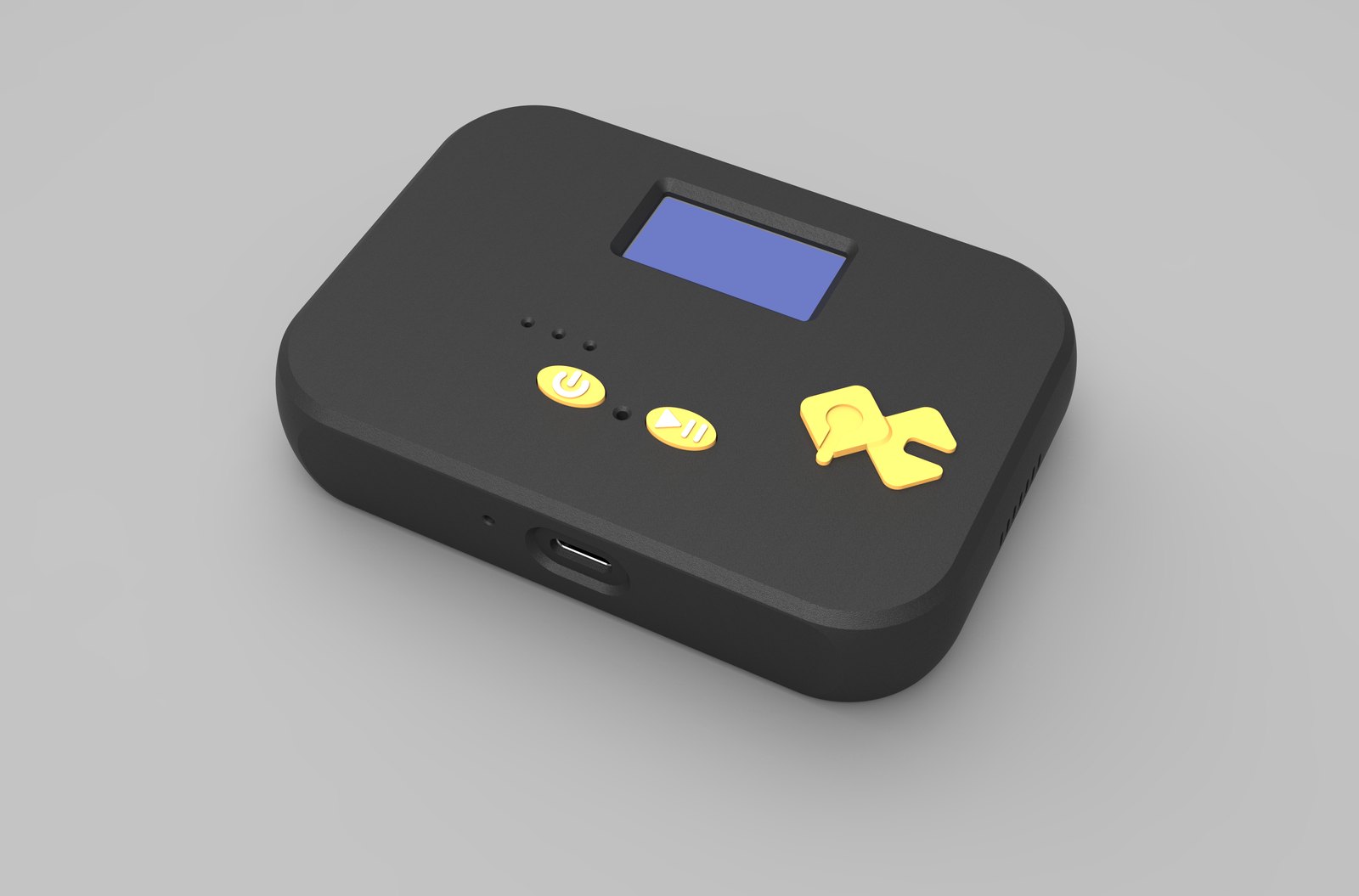
| QuickComm Table Top | $200 | Desk or wall unit, mic tuned for table distance, display for network, firmware and assignment, two buttons, LED, 1000 mAh battery, USB-C | A room, a bench or any fixed position |
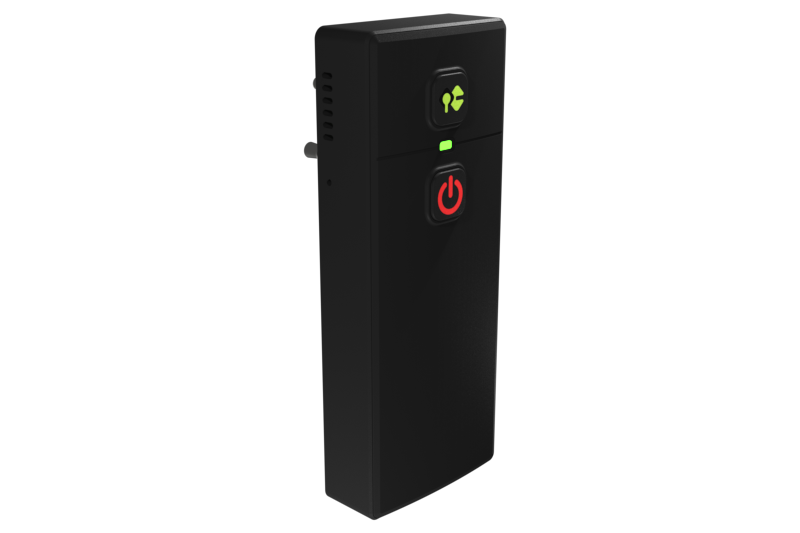
| QuickComm Bridge Node | $250 | Belt-clip unit with a 3.5 mm and 2.5 mm two-pin jack, two-way mic and speaker, inline so the host keeps working, display, USB-C | Joining radios, intercoms, PA systems and consoles already in place |
If you cannot decide, the Table Top is the cheapest way to learn whether your project works with a device in the room rather than a laptop lid open in front of you.
What does buying one actually involve?
Units are built to order and ship in 10 days worldwide, a lead time to plan around rather than a stock level. Shipping is free over $2,000, and volume discounts apply as the count rises: 5% at five units or more, 10% at ten or more, 15% at twenty-five or more, and 20% at fifty or more.
Shipping terms are DAP, so import duties and local taxes are paid by the buyer on arrival rather than at checkout. Budget for that honestly, because in some countries it adds a meaningful amount and it is a poor thing to learn from a courier.
The warranty runs 12 months and covers manufacturing and component failure, not physical damage. Returns run for 7 days. Customer support lasts the lifetime of the device, and a builders community on Slack is where most useful traffic between people building against the same hardware ends up. Docs live in the console with your account.
The hardware is designed and engineered in Dubai by Quickgen Technologies, and the design is patent pending. Devices and console launch together, so neither half waits for the other.
Why this arrangement suits people who already have a project
Most readers of a page like this already have something running: a prompt, a model, some glue code, and a suspicion that it would all be better if it were not trapped in a browser tab. The gap is not intelligence, it is a microphone in the right place with a dependable path back to existing code.
The belief worth arguing with is that serious voice products need vertically integrated hardware, with the vendor supplying device and intelligence together. For a builder that integration is a liability. A voice AI dev kit that insisted on owning your stack would be a worse product, because the first week would go on getting your own stack back.
AI hardware for developers earns its price by closing one gap and declining to close any others. Self-hosted voice AI stays self-hosted only if the capture layer is indifferent to where the audio goes.
What this hardware does not do
- No AI and no inference run on the device. Voice activity detection is the only local processing, and every model runs on the buyer's backend.
- No ingress protection rating is claimed, and no environmental ratings are promised beyond what each product page states.
- Wi-Fi is 2.4 GHz only, so congested sites are a planning problem rather than a solved one.
- Capture is 16 kHz mono, correct for speech recognition and wrong for music, stereo imaging or separating speakers across a table.
- Audio quality follows the source, so a Bridge Node on a noisy radio channel delivers that noise faithfully.
- The 12-month warranty excludes physical damage, returns run for 7 days, and import duties are paid by the buyer under DAP terms.
The person who should not buy one is anybody who wants a finished assistant out of the box. If the appeal is having something to talk to this evening without writing a line of code, this is the wrong purchase, and a commercial smart speaker is cheaper and better at exactly that job.
Anybody whose project is genuinely served by a phone or a USB microphone should also stay put. If your agent runs on the machine in front of you and you are the only user, a decent USB mic is a better use of the money. Dedicated hardware earns its price at hands free operation, capture at room distance, several positions at once, or a physical button people use without thinking.
Common questions
Is a voice AI dev kit the same as a prototyping board?
No. A prototyping board expects you to design the enclosure, the power and the radio integration yourself. A development kit of this sort is finished hardware with all of that done, leaving configuration and your own backend as the work. QuickComm units arrive assembled and pre-flashed, configured from the console rather than reflashed.
Can these devices work without sending audio to a third party?
Yes. The stream endpoint is configurable from the console and a LAN server is a valid target, so audio can stay inside your own network with local models such as Ollama or a self-hosted Whisper doing the work. The devices also connect over BLE locally, and once configured a unit streams to your endpoint without depending on the console.
What does the 12-month warranty actually cover?
The 12-month warranty covers manufacturing and component failure and excludes physical damage, so a unit dropped on concrete is not a warranty case. Returns run for 7 days from delivery, and customer support continues for the lifetime of the device regardless of warranty status.
How do the volume discounts and shipping costs work?
Discounts scale with the order: 5% at five units or more, 10% at ten or more, 15% at twenty-five or more, and 20% at fifty or more. Shipping is free over $2,000, and every order ships DAP, so the buyer pays import duties and local taxes on arrival rather than at checkout.
Deciding whether the trade is right for you
Read the product page for whichever shape matches your problem: the Earpiece at $350 for a person, the Table Top at $200 for a room, the Bridge Node at $250 for equipment already in place. Each is built to order with a 10 day lead time, a 12-month warranty and a 7 day return window.
Buy one on the understanding that what arrives is a well made microphone, radio and battery with a management layer attached, and that everything impressive about the finished system will be yours. That is what a voice AI dev kit is for, and a fair trade for anyone who was going to write that part regardless.