industrial voice AI
Industrial voice AI: getting your agent to someone whose hands are already full
Industrial voice AI needs buttons, shift-length power and a way onto the radios and intercoms already on the floor. What the hardware side really costs.
August 12, 2026 9 min read
A technician is halfway inside a machine guard with a torch in one hand and a cover in the other, and the answer to the question slowing them down is sitting in an agent that only accepts typing. Industrial voice AI is the attempt to close that gap, and the hard part is almost never the model. QuickComm publishes this guide because the failure usually happens at the device, in the two seconds where someone has to press something and speak.
Industrial voice AI is the practice of making a voice-driven agent usable in a production environment, where the person asking has occupied hands, protective equipment, background noise and no spare attention for a screen.
The short version
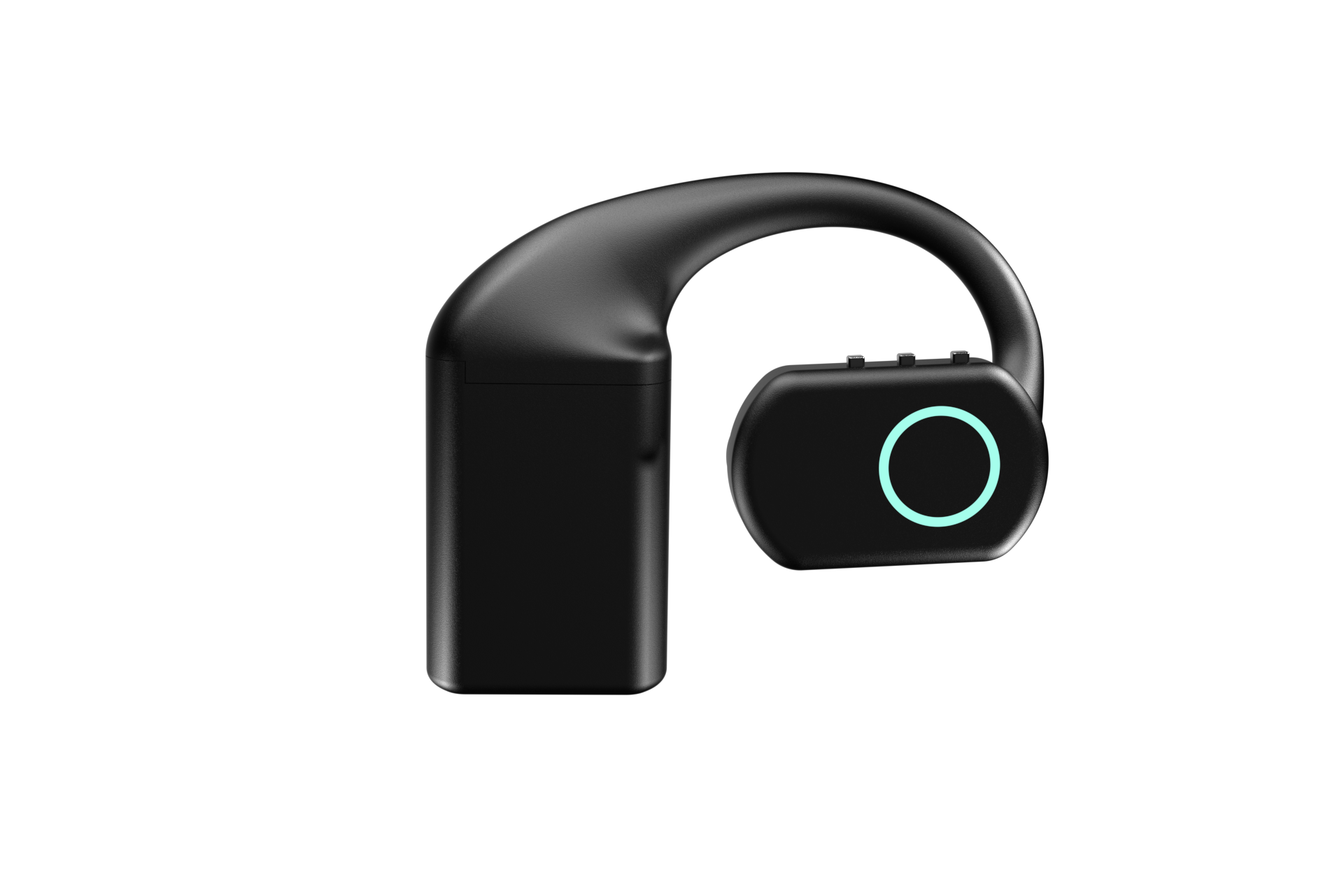
- The QuickComm Earpiece is a $350 over-ear dev kit with three physical buttons, power, volume up and volume down, and no touch surface at all.
- The Earpiece runs on three hot-swap 700 mAh battery packs, about 8 hours each and about 24 hours combined, with a charging dock that holds its own charge.
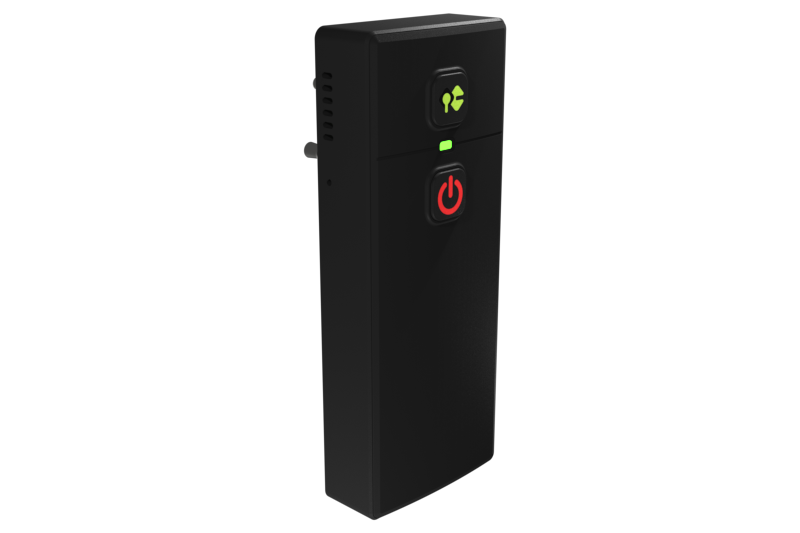
- The QuickComm Bridge Node is a $250 belt-clip dev kit that plugs into the 3.5 mm and 2.5 mm two-pin audio jack used by two-way radios, radio headsets, intercoms, PA systems, desk phones and consoles.
- Both units capture 16 kHz mono PCM through a 24-bit codec and stream it over the loss-tolerant udp-v1 protocol to an endpoint the buyer configures, which can be a server on the plant LAN.
- No speech to text, wake word or model runs on either device, so recognition accuracy in a noisy area is a property of the buyer's own stack.
- No ingress protection rating is claimed for any QuickComm device, and the 12-month warranty excludes physical damage.
Why does a touchscreen fail on a factory floor?
A touchscreen fails because it assumes a clean dry finger, a free hand and enough spare attention to look at a rectangle. None of those assumptions survive a shift. A phone adds a fourth assumption, which is a pocket reachable through protective equipment, and that one rarely survives either.
The interaction that does survive is short and blind: find a control by feel, ask the question out loud, listen to the answer while the hands carry on. Anything requiring a glance is an interaction that competes with the task, and competing with the task is how tablets mounted on cells turn into shelves.
Here is the belief worth arguing with. Teams treat adoption on the floor as a model quality problem and respond to a failed pilot by swapping recognition vendors. Adoption is decided earlier than that, by whether the operator can start and finish a turn without stopping work, and the best model in the world loses to a device nobody can trigger with gloves on.
Buttons you can find without looking
The QuickComm Earpiece answers that with three physical buttons and no touch surface, which is a deliberate restriction rather than a missing feature. A physical button can be found with a gloved hand, in poor light, from up a ladder, and a wet sleeve brushing past it does not trigger anything.
Push to talk hardware also fixes a quieter problem. Framing a turn with a button means silence is never streamed, so your endpoint receives intentional speech instead of eight hours of compressor noise, and pre-roll buffering keeps the first syllable when somebody starts talking as the button goes down. On-device voice activity detection sits alongside the button rather than replacing it.
An RGB LED returns state without a screen, and an integrated speaker returns the answer. Operators learn a small colour vocabulary in one shift and stop thinking about the device, which is the outcome you want from voice agent hardware in a place where attention is expensive.
How much battery does a device need to survive a shift?
Enough to cover a full shift with a swap rather than a recharge, because a device that dies at hour seven trains people to stop relying on it. The Earpiece ships with three hot-swap 700 mAh packs, about 8 hours each and about 24 hours combined, plus a rechargeable charging dock that holds its own charge.
The practical shape of that arrangement is a pack change at a break, taking seconds, rather than a device out of service for hours. A dock holding its own charge can also live in a supervisor's cabinet without occupying a permanently free socket, which matters on floors where sockets are contested.
Across a three shift pattern the packs rotate faster than the people do, so a small pool of units covers more heads than a one device per person plan would. Count packs rather than counting bodies when sizing an order.
Using the radios and intercoms already on the floor
Issuing new hardware to two hundred people is a change management project wearing an engineering costume. Most floors already carry an audio system that works and that people trust, whether that is two-way radios, radio headsets, intercom stations, PA systems, desk phones or a control room console.
The QuickComm Bridge Node is a belt-clip unit that plugs into the 3.5 mm and 2.5 mm two-pin audio jack those devices share. The unit sits inline, so the host handset carries on working exactly as before, and it is two-way, carrying both a microphone and a speaker, so your agent can reply on the same line the question arrived on. As an audio jack bridge it lets the first version of an industrial voice AI reach people through equipment already clipped to their belt.
That route inherits an operating discipline you would otherwise have to teach. People who already use a radio know when to key up and when to stay off the channel, and that habit does more for your recognition results than most tuning available downstream.
What runs on the device and what runs in your backend
The split is strict and worth stating without decoration. Both units are pre-flashed dev kits that capture 16 kHz mono PCM through a 24-bit codec, frame it with push to talk and on-device voice activity detection, and stream it over udp-v1 to an endpoint you configure. Wi-Fi is 802.11 b/g/n on 2.4 GHz, with Bluetooth 5.2 for the local link.
Everything above that line lives with you. Speech to text, wake word, retrieval across your maintenance manuals, the model itself and text to speech all run in your backend, on Deepgram, Whisper, OpenAI Realtime, ElevenLabs, a local Ollama build or any mix of them. The endpoint can be a server on the plant LAN, which matters on sites where the process network does not reach the internet and is not about to start.
How do you run a fleet across three shifts and two buildings?
Mostly by never needing to touch the units once they are out. Provisioning happens by QR code, which puts a device on the network and points it at your endpoint without anyone typing configuration on a shop floor, and setup is three steps from the console.
After that, OTA firmware updates, remote commands and health telemetry let you change behaviour and see which units are healthy without collecting them into one room. The Bridge Node carries an on-device display, so whoever is holding one can read its state without borrowing a laptop from the office.
Behaviour changes belong to the team that owns the agent, since the devices arrive pre-flashed and the endpoint is set from the console. Nobody needs to open a case or run a toolchain to change what the agent does.
What this hardware does not do
- No ingress protection rating is claimed for any unit, so an area needing certified wash-down, heavy dust or moisture protection needs a different device.
- No AI runs on the device beyond voice activity detection, and all inference happens on your backend.
- Coverage is not supplied with the hardware. Metal racking, moving machinery and reinforced concrete all affect 2.4 GHz, and udp-v1 being loss tolerant means a session degrades rather than collapsing, which is not the same as coverage.
- Noise remains a hard input for whatever recognition you run. A stamping bay is a difficult acoustic environment for every speech to text engine on the market, and nothing on the device improves it.
- Capture is 16 kHz mono PCM only, and Wi-Fi is 2.4 GHz only.
- The 12-month warranty excludes physical damage, which is worth reading twice before handing units to a scrap line.
Anybody whose questions get asked sitting at a fixed bench with a spare hand and a keyboard should not buy this hardware. A plain workstation and a text box will serve them better and cost nothing extra, and a voice interface only repays its cost where the hands are genuinely occupied.
Common questions
Will industrial voice AI work in a genuinely loud area?
That depends entirely on your recognition stack, because QuickComm hardware does no transcription of any kind. A MEMS mic close to the mouth and push to talk framing give the stack the best input available, and the rest is down to the model you chose. Record in the loudest area you intend to cover, run those recordings through the exact engine you plan to deploy, and read the output before writing a business case.
Do we have to replace the radios and handsets people already carry?
No, and replacing them is usually the fastest way to lose the project. The QuickComm Bridge Node plugs into the 3.5 mm and 2.5 mm two-pin jack on existing radios, intercoms, PA systems and desk phones and sits inline, so the host device keeps working as it always did. Your agent becomes another participant on a channel people already trust.
Can the agent answer out loud rather than sending text somewhere?
Yes, because both units are two-way. The Earpiece has an integrated speaker and the Bridge Node has a speaker on the same connection it listens through, so audio your text to speech produces comes back to the person who asked. What that voice says is entirely a function of your backend, since no model runs on the device.
How many units should a first industrial voice AI pilot use?
Two or three, on one cell and one shift, with a single clearly defined question set. Most failed deployments scaled a demo that had never met the real acoustics, so the useful measure early is how often the answer came back correct in the actual area. Volume discounts start at five units and rise at 10, 25 and 50, so growing after a good pilot is cheaper per device than the pilot was.
A realistic first order
The Earpiece is $350 and the Bridge Node is $250, both built to order and shipped worldwide in 10 days. Choose the Earpiece where people move between cells with nothing to attach to, choose the Bridge Node where radios and intercoms already carry the traffic, and take both where supervisors live on a channel and technicians want their hands free.
Docs live in the console with your account, support runs for the life of the device, and the builders community on Slack is full of people wiring these into their own backends. Start with the smallest deployment that would tell you something true about your floor.